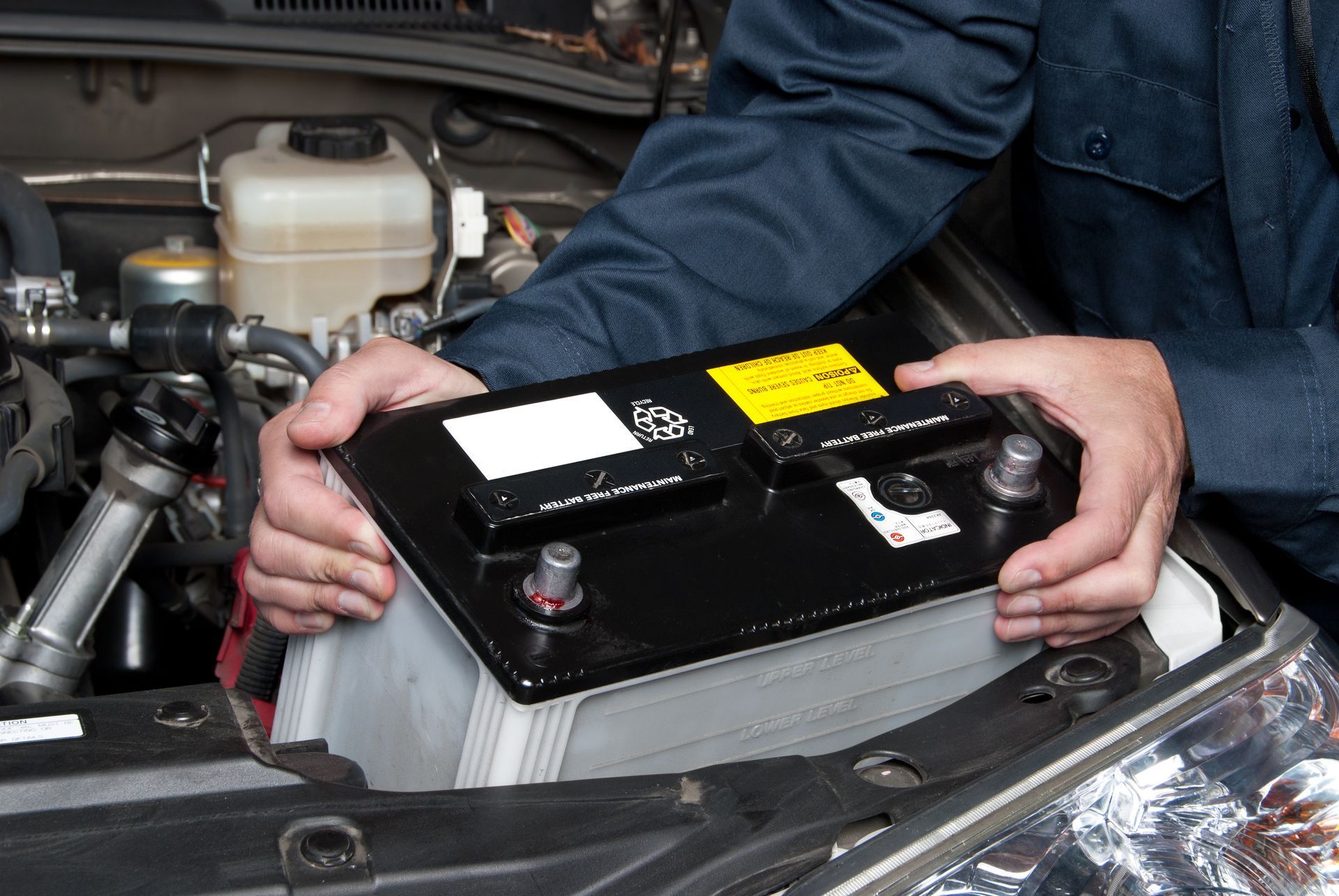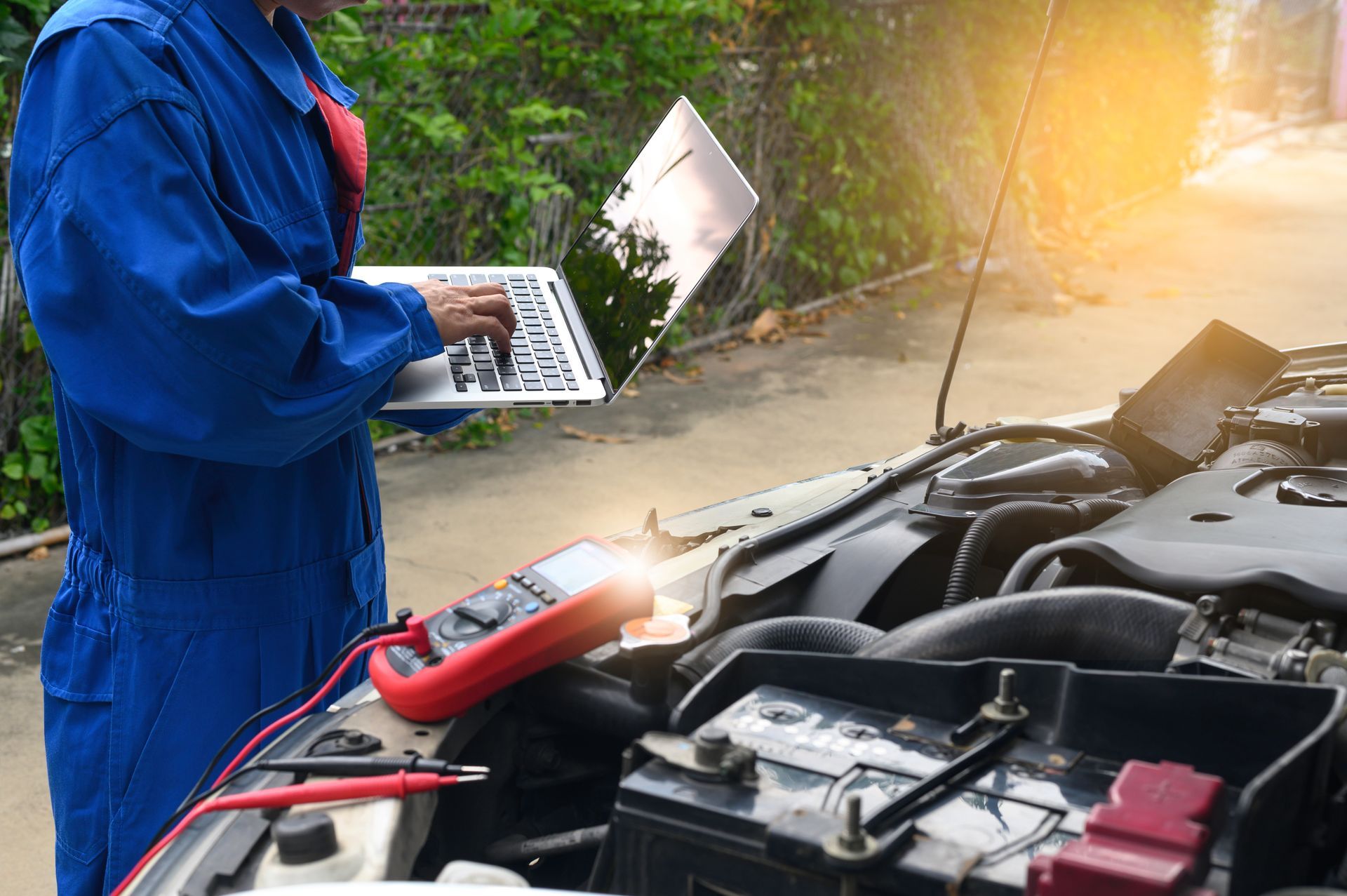
Most people picture a jumpstart the same way: two cars, a set of jumper cables, and a little bit of nervousness while making sure the clamps go in the right places. But what happens when there is no second vehicle around? Maybe you are parked at home, stuck in a garage, or in a lot where nobody is nearby to help. At that point, the question gets very practical, very fast: can you jumpstart a dead battery without another car?
At our shop, the answer is yes, sometimes you can. But it depends on what you have with you, how dead the battery really is, and whether the battery is simply discharged or actually failing. A jumpstart without another vehicle is absolutely possible if you have the right equipment. What matters is doing it safely and understanding when a jump is only a temporary fix.
The big thing we always want drivers to remember is that a dead battery is not just an inconvenience. It is also a clue. Sometimes the battery was drained by leaving a light on. Other times, it is the battery itself getting weak, a charging system issue, or a connection problem that needs attention. So yes, you may be able to get the car started without another vehicle, but the real question is whether it will keep happening if the underlying cause is not addressed.
Yes, A Portable Jump Starter Can Do The Job
The most common way to jumpstart a vehicle without another car is with a portable jump starter, sometimes called a jump pack or battery booster. These are compact battery-powered units designed specifically to provide enough power to start your vehicle on their own.
They have become a lot more popular in recent years for a reason. They are convenient, they fit in the trunk or cargo area, and they can save you from needing another car entirely. For many drivers, a portable jump starter is one of the smartest emergency tools to keep in the vehicle.
When used correctly, a good jump pack can start a car with a dead battery the same basic way another vehicle would, but without needing a second set of jumper cables and another person.
How It Works At A High Level
A portable jump starter stores electrical power in its own internal battery. When you connect it to your car’s battery, it supplies enough current to help the starter crank the engine. Once the engine starts, the vehicle’s charging system takes over.
It is a pretty simple idea, but the details still matter. You want to make sure the jump starter is rated appropriately for your vehicle, charged up ahead of time, and connected properly. Otherwise, it may not have enough power or may not work safely.
This is one reason we always recommend not waiting until the emergency to learn how your jump starter works. It is much better to read the instructions and know where your battery terminals are before you are stranded somewhere frustrated.
A Jumpstart Still Does Not Solve Everything
This is the part people sometimes overlook. A jumpstart gets the vehicle started. It does not automatically tell you why the battery died.
There are several possible reasons your battery may be dead:
- The battery is old and weak
- A light or accessory was left on
- The vehicle sat too long without being driven
- The charging system is not working properly
- A cable or terminal connection is corroded or loose
If the cause is something simple and one-time, a jump may get you back on the road without much drama. But if the battery is failing or the alternator is not charging correctly, the problem is going to come back.
That is why we look at jumpstarting as the first step, not always the final answer.
What If You Do Not Have A Jump Pack
This is where things get less flexible. If you do not have another vehicle and you do not have a portable jump starter, your options are more limited. In many newer automatic vehicles, there is no practical way to get the engine started without outside electrical help.
Some older manual-transmission vehicles could sometimes be push-started by rolling the car and releasing the clutch in gear, but that does not apply to most automatic vehicles, and it is not something we recommend treating as a routine solution even where it is technically possible. If there is no second vehicle and no jump pack available, the realistic next step is usually roadside assistance or battery service.
Portable Jump Starters Are Worth Keeping In The Car
From our perspective, this is one of the easiest ways to be better prepared. A portable jump starter is one of those items that seems unnecessary right up until the day it saves you.
A good one can be especially helpful if you:
- Travel alone often
- Park in places where help may not be nearby
- Own an older vehicle
- Deal with cold weather or heat that is hard on batteries
- Want to avoid waiting around for another driver to help
Many jump packs also include extras like USB charging ports, flashlights, or air compressors, but the real value is simply being able to restart your own car without depending on another vehicle.
Safety Still Matters
Even though jump packs are convenient, they still need to be used correctly. A battery can be dangerous if mishandled, and reversed polarity or poor connections can create serious problems.
At a basic level, you always want to:
- Follow the jump starter’s instructions
- Connect the clamps correctly
- Make sure the unit has enough charge
- Keep sparks and flames away from the battery area
- Stop if the battery looks damaged, swollen, or leaking
If the battery is physically damaged or you smell something unusual, that is not the time to keep experimenting. Safety comes first.
Sometimes The Battery Is Too Far Gone
Not every dead battery will respond to a jump. If the battery has an internal failure, is severely degraded, or has been drained too deeply, a jump pack may not bring it back to life in a useful way. In some cases, the vehicle may crank weakly or start and then die again quickly.
This is often what happens when the battery is not just low, but worn out.
A few signs the battery may be more than “just dead” include:
- Repeated jumpstarts in a short period of time
- Slow cranking even after a successful jump
- Electrical weirdness or dim lights before the no-start
- A battery that is several years old
- A battery warning light or charging-system issues
In those cases, it is better to think in terms of battery testing or replacement, not just another jump.
After The Car Starts, Do Not Assume You Are Done
Once the engine starts, a lot of drivers understandably feel relieved and move on. But what happens next matters. If the battery was drained by accident, the car may need some driving time to recharge. If the battery is weak or the alternator is not doing its job, the vehicle may not restart the next time you shut it off.
That is why a dead battery should always raise a follow-up question: was this a one-time drain, or is there a real battery or charging problem developing?
If you jumpstart the vehicle and everything seems normal, that is a good sign. But if it struggles again later the same day or the next morning, it is time to stop guessing.
The Best Long-Term Answer Is Prevention
Jumpstarting a dead battery without another vehicle is absolutely possible with a portable jump starter, and it is one of the smartest emergency tools a driver can carry. But the best way to avoid the whole situation is still regular battery checks, clean terminals, and paying attention to early warning signs before the battery fully quits.
At Cains Auto Shop, we would always rather test a battery before it leaves someone stranded than after.
So, can you jumpstart a dead battery without another vehicle? Yes, you can, if you have a portable jump starter and use it correctly. For many drivers, that is the easiest and most practical backup plan. But a jumpstart only gets the car moving again. It does not tell you whether the battery is healthy, whether the charging system is working, or whether the problem is going to return.
Get those answers at Cains Auto Shop in Hope Mills, NC. We can test the battery, inspect the charging system, and help you fix the real problem instead of just dealing with the symptom. Call us today or stop by to schedule a battery and charging system inspection.